Wednesday, January 8, 2020

Guest Performance: How Racism is a Founding Principle

I came across the following and thought it would be a great contribution to the overall themes of the Founding that this blog has put forth. 


Submission written by Jocelyn Haley

AmericaHypothesis: The question addressed here is about why white Revolutionaries did not extend freedom to African Americans – the Founders wrote that “all men are created equal” but they did not develop a society like that. Why? Were there real cultural reasons or was it just hypocrisy? What is the role and meaning of racism in this decision?


I advance it therefore as a suspicion only, that the blacks, whether originally a distinct race, or made distinct by time and circumstances, are inferior to the whites in the endowments both of body and mind. It is not against experience to suppose, that different species of the same genus, or varieties of the same species, may possess different qualifications.
Thomas Jefferson – Notes on Virginia

Why slavery was maintained during the age of “liberty and justice for all,” the American Revolution, can be argued on a technicality that the Founding Fathers of United States were not hypocrites when writing “all men are created equal” into the Declaration of Independence. That technicality depends on how the statement is interpreted, and if put into historical context the inherent racism suggested by the continuance of slavery is actually worse than what appears to be hypocrisy and a disconnection of our presumed national values. Assuming the declaration was originally promulgated that “all men are created equal,” with slavery already prominent, by default that did not include slaves – African or otherwiseConsidering the Founders complete hypocrites on the matter is implying that at some point they considered blacks as equals to qualify the statement. If anything the addition of that part of the Declaration was to further the agenda of keeping blacks, and most likely all women, inferior in the white man’s America. Substantial evidence points to the fact that the Founding Fathers did not mean for the document to be understood in the universal meaning that subsequent generations want to interpret “all men.” In the century prior to the Declaration, when indentured servitude ignited America’s economy and was replaced by African slavery, assumptions of blacks caused a racially biased society by the 1700s and resulted in the Declaration of Independence denying blacks the same rights given to men – white men. Racism was not made from the release of this proclamation, or even from slavery alone, but a systematic marginalization of people occurred because there were already cultural matters in place that led to the circumstances of a contradictory form of freedom at the founding of the United States, which was allowed to continue on into perpetuity.
Even though slavery is now viewed as morally unjust, the practice of owning people for the sake of labor and profits had already been justifiably instilled in the culture of the 1700s. Slavery was developed to fill the demand for workers as more plantation economies developed and time became money. People of the 1700s were more concerned with what was thought to be a cheaper, more efficient and a more productive way to financially sustain their profits. Immigrants came over by the hundreds with anticipation of owning land which presented the opportunity for profit through the means of indentured servitude. With this normative in society, certain laws and habits were formed into the general public, one of which was the acceptance of owning another human being. For these owners, the problem with servants was the rights and the contracts of the indenture and the support they had from the courts, an issue later seemingly remedied with slaves. Indentured servants were not required to work past their contracts and were granted freedom when they paid their dues of four to seven years. Once freed, servants often were allowed to own land, some of which whom had the promise of receiving it within their contracts. This increased the demand for labor and began straining the economy. Slaves were a more renewable source, could be owned for the entirety of their lives and were without rights or support from the courts. Rights and protection being given to immigrants looking to settle in on the new land while slaves were forcibly taken from theirs and given none is evidence to the sad truth that America’s founding fathers knew by 1776 how freedom was defined -- that it came with protective rights and the fact they didn’t want slaves to have either. 
The sudden switch from the use of white indentured servants to the enslavement of African Americans birthed a negative perception of race and the release of the Declaration of Independence solidified these views. At the beginning of the 1600s, English law didn’t recognize what we now think of slavery, which therefore caused a small number of Africans brought from the Caribbean to Virginia to gain a path to freedom through indentured servitude and, afterward, gain subject’s rights, which included owning land and slaves or English and African servants. However, that path was a short won and soon ended, along with the success of the tobacco market by the 1660s. Only a third of the original profits of tobacco was coming in when a legislator shared that blacks can produce it more efficiently than whites. With gentry power increased, other men in power assumed it to be true causing a more race-conscious society as they imported more Africans to work the lands. Legislators began differentiating people more so by color than religion and by the 1670s blacks were being prohibited from certain rights such as owning guns, owning English servants or joining the militia. Soon after, the labels “black” and “slavery” were interchangeable. Slavery was fully acclimated in American culture by the 1700s. Within a lifetime when the Declaration of Independence was created, blacks were already seen to be undeserving of rights and freedom.    
The Declaration of Independence was drafted to proclaim freedom from Great Britain but the new United States wasn’t officially freed until the final victory of the American Revolution through the Treaty of Paris in 1783. Regardless, with the document in place Declaration as the ideological foundation of the nation, the Founding Fathers made it clear they were aware of the importance of freedom in one’s life. Most people have heard the phrase “life, liberty and the pursuit of happiness” as it is stated in the Declaration of Independence. The document defines and elaborates what freedom looks like on a general scale and explains how liberty should be lived. The introduction of the document elucidates freedom, self-definition and self-determination, not as a privilege but as a right - an inalienable human right, a right that can not be taken away by man, a right of such significance that it was even more important than waging war or making the nation great. The statement declares that the people are in control ahead of the government and that when it becomes ruinous of the ideal of protecting individual rights on a collective front, the people have the right to change it, or end it, then replace it with a new government that better supports their “safety and happiness”. The Declaration asserts that these changes can not be made for insubstantial or impermanent causes, and so the writers of the statement described circumstances that would suffice to replace or change the government; especially in naming “despotism” as an instance where it is the citizens’ “duty” and right to make the governmental change. The right to liberty is the right to be free from bondage, exploitation, usurpation and oppression by someone in authority in order to pursue happiness in life - the very opposite of slavery.   
         In wanting separation from Great Britain for the good reasons listed in the Declaration of Independence, former colonists, now Americans, was were given the opportunity to create their own foundation of values and culture instead of being held to those of Great Britain- to redefine the meaning of America. Alas, due to a race-conscious belief being embedded into their values they made the choice to dehumanize African Americans by continuing to define them as inferior to man. With a larger racial divide, whites remained prominent as the majority race in America. Those beliefs stemmed from indentured servitude going from wrong to inhumane by taking away the rights of people and justifying it later all for the sake of creating a financially successful economy by using cheaper, exploitable labor. The Declaration of Independence was a document representative of freedom, and considering that slavery was already prominent by the time it was written, there’s reason to believe the writers of the document intentionally didn’t extend that freedom to blacks. Therefore, the Founders aren’t to be considered hypocrites, but just misinformed and selfish. They were misinformed about racial differences and encouraged them throughout the course of slavery, producing racism. It was the desire to remain culturally and economically successful above blacks that got in the way of them challenging how they handle “outsiders” of their ethnicity. Considering they saw blacks as useful, yet beneath them, it would have been a huge depletion of money, power, pride and racial superiority for whites to allow the freedom and success of blacks. 

Tuesday, October 8, 2019

Life Among the Lowly: Uncle Tom's Cabin Revisited through the Hug of a Murderer


AmericaHypothesis: Since this post is projected towards an unknown future, I can offer no hypothesis based on the past.

Brandt Jean hugged Amber Guyger, the convicted murderer of his brother Botham Jean. It was depicted as an extraordinary act of forgiveness, which calls to mind another heroic act of forgiveness, that of Uncle Tom praying for his own murderer as he is being beaten to death by a slave master.
Most of us know the term Uncle Tom from its 20thcentury meaning as an African American who is so cowardly that they have allied with their own persecutor instead of standing up to protect themselves and their community’s rights. But Uncle Tom’s Cabin: Life Among the Lowly was written in the 19th century, and the intent of its author, a white woman unfamiliar with slavery first hand, Harriet Beecher Stowe, was far different than what 20th century politics and society did with the hero of her story, Uncle Tom.
When he met Harriet Beecher Stowe, President Abraham Lincoln purportedly joked that here was the woman who started the Civil War. Her writing reached hundreds of thousands of readers, primarily northerners, and raised their consciousness as to the evils of African slavery in the South, and it had a particular message as to the solution – which was decidedly not war. The book, while not based on a first hand accounting of slavery or of life in the south encapsulates the history of slavery, and did form the basis for abolitionist moral outreach in the 1850s.
Here is a brief synopsis of a book everyone in America should read. At the beginning of the story Uncle Tom lives on a small farm with his family who is enslaved to a middling white farming family. A majority of slaves in the 18th and early 19th century lived in similar circumstance, with only about a quarter of the slave population living on large plantations with large numbers of slaves. But hard times fall on the white family, and Uncle Tom and his family are subject to their worst fears, being sold down river to where the large plantations enforce their labor conditions with violence. 
Of course, violence hung over their heads as slaves in all instances, but on the small farm Stowe depicts a more harmonious life. Such happens to Uncle Tom and he is sold down river. All he has is his faith in god and the love which that faith inspires in him.  After saving a little white girl’s life Tom is nearly freed but instead his new owner, the clear villain of the story, Simon Legree, has him beaten to death – not because he is a slave, but because he refuses to divulge information on some runaways. As he dies he prays for the forgiveness and redemption of his murderers. 
For Stowe, and Abolitionists of the time, Uncle Tom’s self-sacrifice was a Christ-like expression of power through Grace. Further, Uncle Tom would not succumb to the violence of hatred and rise up to fight against those who murdered him. Uncle Tom is a hero of the non-resistance strategy of the Abolitionist movement, and an example of how only love can overcome hate. At least in the 19thcentury. 
By the 20th century, Uncle Tom’s actions fell under increased scrutiny. “For my part, I was never an admirer of Uncle Tom, nor his type of goodness,” stated Harlem Renaissance leader, the composer, James Weldon Johnson, who went on to state, “but I believe that there were lots of old Negroes as foolishly good as he.” Quite a different take than the suggestion that Stowe’s character sparked a Civil War to end the institution.
While the denigration of Uncle Tom may have come from the white produced film version in 1903 with black face actors and a change to the story – Tom was not terrific – it appears that the politics of the 20th century demanded a change with the rise of Marcus Garvey’s Black Nationalism. New ideas and new leaders who supported another, more active style of strength were seen as necessary. But most certainly, the greatest civil rights leader was not a nationalist, and instead, relied on non-resistance under the more familiar phrase, non-violence. Dr. King’s legacy is only love can overcome hate – not strength of arms and action, but love.
The murder of Botham Jean is a tragedy and a tragedy of the invidiousness of race in America. Had he been white, it seems highly unlikely that the white, off-duty cop would have shot him as he sat in his own apartment. Amber Guyger, the off-duty cop may well have been confused and thought a man was in her apartment, but she pulled trigger because Botham was black.  He, like everyone in America, was judged by the color of his skin rather than the content of his character – and everyone is thusly judged, but some gain privilege and some punishment and persecution. Such was the fate of Botham Jean, guilty of being black in America.
Guyger was found guilty of murder, perhaps as a white female, she did not have as much privilege as other cops who have shot and killed black men. Still, the verdict is somewhat of a surprise, but not nearly as surprising as the sentencing. Botham’s brother, Brandt, was allowed to speak directly to the convicted murderer of his brother in open court. And what he said and did was overwhelming to even the judge, whose lack of judicial decorum will not be subject here.
Brandt forgave. Brandt loved.
Brandt even went so far as to hug his own brother’s murderer. Wow.
There are many differences between Brandt Jean and Uncle Tom – the situations are hardly the same, but quite obviously Brandt meant to convey a similar message to the World as did the author of Uncle Tom. Only love can overcome hate.
But already there is a disquiet about this scene. Not really about Brandt’s actions, yet, but mostly about how awed people have been at “Black Forgiveness” and the perception that this has become the focus instead of the alarming and continued persecution of blackness, browness, “otherness” in America. And those critics are right. The fascinating event of this hug cannot overshadow the continual systemic and personal violence perpetrated on some Americans (and non-Americans) because they are deemed criminal, or alien, or not worthy of the guarantees of rights in this society.
But it does make you wonder which Uncle Tom Brandt Jean will be remembered as.

Fear and Hope: The Intersection of Star Wars, Dune and the American Cultural Psychology, Part III

‘He is the Kwisatz Haderach!’ 
The line from Dune ushers in the revelation that Paul is the promised savior, or literally, the person who can be (say it in a whisper) many places at once.
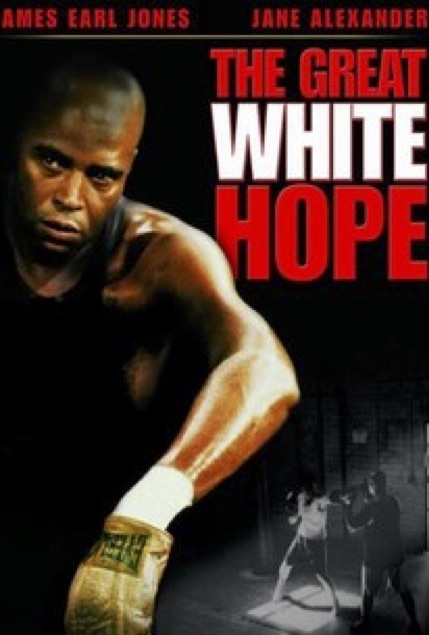
      A trope of fiction and human society is the Kwisatz Haderach, Messiah, Chosen One, Great White Hope, Fuehrer, and many more. The One who can solve all the problems that we have is yearned for through the ages and pages of the human mind -- Someone who can preserve what is possessed and bring salvation from any threat real or imagined. The only hope that Fear possesses is the arrival of such a being.
      Democracy, as defined in the Liberal Revolutions of England, America and France, by definition cannot rely on such solutions, but of necessity, and by definition, can only be found in the “hearts and minds,” as the Founders put it, of the many. And to that end, the many have to be willing to take control of themselves and by extension their own community, and figure out solutions themselves.  Fear cannot be the basis of democracy, not real democracy, because Fear compels people towards the Kwitsatz Haderach, even if, like Paul Atreides, he is not cut out for the job, or like his son, Leido II, becomes a hideous monster God Emperor. But what informs such a desire, this desire for vicarious salvation through a champion?
It is the Child of Fear, Ignorance, the utter abrogation of self, and the denial of will to be replaced by another, whether false or true … and relying on the Kwitsatz Haderach, seldom rings with a satisfying truth.
      We often use ignorance as a synonym for stupidity – it’s not. The term is also used to suggest a lack of knowledge, but that is only part. More fully it is the neglect of reason and the absence of will to utilize the tool of reason to establish a response.
      While there are dozens of opportunities in human history to examine Ignorance (the child) fostering Fear (the parent), the context of contemporary America is the example most presient, and interesting – mostly, because it just shouldn’t happen here. It shouldn’t happen here because ignorance, in its many forms, should not be the praxis of our cultural psychology, and that cultural psychology should not be manifest through fear – but at current, both Ignorance and Fear, play a striking part in the American political dynamic. Sad.
Sometimes even the Chosen One can be
marginalized for not being "normal" enough
      American culture is changing – though some might add that it is coming to fruition, with trends of inclusion, tolerance, secularization and a base-line of material well-being that historic societies only dreamt of.  The 1960s brought about revolutionary concepts, if not revolutionary change, through rights movements for women, peoples outside the majority “race,” (most particularly the Civil Rights Movement of African Americans) and challenges were brought to existing sexual standards, for both straight and gay. Birth control was one of many pills that American culture had to swallow, and for many, the taste was bitter in their mouths. 

Unlike Paul Atreides, who ultimately was not up to the task of fulfilling his role as the Kwitsatz Haderach – he didn’t want to become a worm – Ronald Reagan was quite willing, and quite a worm. He led the forces of Fear, who believed they were losing their America, an America complete with its inconsistencies and hypocrisies that allowed for the destruction of self-definition and self-determination (freedom) for those who were defined as the “other,” and, therefore, not entitled to the full good graces of being American. Black and brown, yellow and red, gay, or not straight enough, and women who would not accept a biological role controlled by men were not part of Reagan’s group and they were largely defined out of the blessings of freedom, much as they had for most of America’s existence.
Reagan wasn't in this movie --
He was in the Reality show.
Reagan was the protector of white privilege, the savior of what “we” possess, and the Messiah to rescue us from the invasion of the other. All faith was placed in this man to roll back the possibilities of a Hoping millions, who merely wished to achieve their version of an American dream. 
      But Reason, the well-spring of Hope, did not rest. The theory of America, based on reason, established through hope, is the promise of self-definition and determination, and that theory was determined to rise over a practice of exclusion and Fear. The ultimate manifestation of Hope, oh yes, that’s too easy, Obama. 
The Alt Right depicted him as the Messiah,
but instead he was just a human, a good human.
Maybe that is what we all need to be.
Not because of good policy, not because of right action, but because of the audacity to challenge Fear (the protection of the familiar) and Ignorance (the willful neglect of possibility). Obama, as with Trump, is less about the man himself, in terms of culture, and more about the willingness of the majority to think past fear and allow for a new possibility. Likewise, Trump is not the cause of the rise of Fear and Ignorance in the 21st century, but he is the manifestation of those very un-American principles which have haunted this society since the Founding. The answer to the Obama Factor, was typical of Fear and prodded by ignorance, to seek someone who could protect them from the perils of change and this audacious Hope. 
At their tea party, millions waited for a savior. Their Fear disabled them from embracing Hope under any circumstance. Argument would not work, effective practice would not work, consistency in theory and law, would not convince. He is their leader, their Chosen One – He is the Kwitsatz Haderach.
I used to think this Fear came merely from the power of racism, but it’s not that. Fear comes from anything unfamiliar, and race defined through skin shade is just an easy manifestation of the unfamiliar. Even worse is the “familiar” worship of Trump supporters, or more clearly, how they perceive what is “familiar.” It’s not merely wanting “what looks like me, sounds like me, talks like me” – familiarity is also, by extension, what they have been told ought to be, whether that source is parent, party or even more unquestionable, their god. And Fear and god are often synonymous since they are immutable, unchangeable, and are the ultimate in irrationality (not provable or disprovable through rational observation).
And Hate led to Suffering, not Salvation.
And so they cede to an unlikely dictator any possibility. And so they follow in the logic of blind worship. And so we find ourselves with a future of our own past with a choice between Fear and Hope.

Tuesday, October 1, 2019

Fear and Hope: The Intersection of Star Wars, Dune and the American Cultural Psychology, Part II

Fear is the mind killer

The consequences of Fear is ultimately suffering, but why? In another galaxy and most assuredly a very different time, Frank Herbert, the author of the Dune series, gave us the answer. “Fear is the mind-killer.” And while that quote is a bit out of context, like most quotes, it does serve the context here. 


      The children of Fear includes ignorance, whether willful or not. Fear is the mind-killer, the oblation of rational powers, the negation of the hopeful expectation that You can figure things out. Ignorance is not stupidity. It is the lack of knowledge and the lack of will to seek knowledge …. You just don’t know, which leads to a sense of a lack of control. It’s why humans choose "belief," which requires little effort other than obedience to authority imagined or real. Knowledge through reason requires work, doubt and will. Work, to gather and evaluate information, doubt, to discount or affirm sources to determine if they conform to reality or imagination, and will to formulate ideas based on that research and those challenges. Fear kills the mind.
      The northern colonies, and later states, were not without their own fears, but Fear played less of a part in forming the overall cultural psychology that by extension spread from the North to the rest of the United States – except the South – but it could have.  Fear could have dominated all of American life but the road to Fear was blocked by a congerie of hopes that emanated from some very peculiar places.
It's horrible that some people believe
this was a promise by their god not to
murder every man, woman and child,
but I guess that would be the ultimate hope?

       The greatest distinguishing feature between the south and the north in cultural psychology is the importance of race and a differing definition of the “other.” The North in its settlement patterns by European populations followed European patterns of identity and cultural psychology, which revolved around religion rather than the new conceptual pattern of the Americas, as did the South, around race. In brief the North’s origin is not embedded in racism – though it is embedded in religion-ism.
      We don’t often dissect the meaning of “Racism” and what that might mean, because we think we know what it means – fear, hate, anger – discriminatory and privileging policies and institutions. While that definition is totally valid it does little to explain the phenomena and even posit or compare or suggest alternatives (Are there non-racist human societies? Only in Utopia, right?). From an anthropological perspective, not physical anthropology, but the study of human culture and behavior, human groups develop various ways to define identity and community – to basically define who belongs and who does not, who is in our group, what is our group and who is not and why. As written in Understanding Different Worlds (Blog April, 2018) the primary basis for a definition of self and society is external markers that indicate shared blood. “Natural” humans protected their DNA to preserve their DNA. They promoted the needs of their blood group over those of groups where there was no shared blood – just like most animals. Over time, and incorporated into the earliest “Archaic” civilizations, was this rule of blood. Today, we hear it termed in political discourse as the negative term Tribalism, but that is what we are, tribal. 
Our team wears orange hats

What entails belonging in the tribe, however, became more complex as societies developed the resource base to become more complex. Blood, membership in a particular tribe, ethnicity, or “Race” was a common unifying element, and recognized by humans by their external markers – “Our blood wears this kind of hat – others wear different hats.” But blood was not always the unifying principle of identity and group think. In 17th century England (when colonization to North America began) the primary sense of belonging, that which established identity and cultural psychology, was religion, not race. When English colonists finally established colonies in the South through Tobacco production and, eventually, African slave labor, religion gave way to “Race,” as it did in most of the Americas, but not in the northern colonies. Religion decided whether you received privilege or persecution within the context of the earliest colonies – even treatment of the PAI Native Americans was often rooted in their alien (and therefore incorrect) religious practice. Colonies, like Massachusetts Bay, were Religionist not racist. Religion defined your place in society and if you were not a Calvinist (or at the very least Christian) you were out. 
But the superstitional, irrational basis of religion got the best of them in Massachusetts as is best witnessed by the Salem Witch Trials of 1692. English society was at the cusp of Modernity – developing rational systems for society, and the irrational craziness of “is she a good witch or a bad witch – who cares, burn her,” got the best of them. Leaders, like Cotton Mather (ironically a Minister) realized that religion as the defining principle had to be tempered to stop the insanity of religion itself. Over the next century, Massachusetts and most northern colonies became more secular and rationally based, not wholly secular, mind you, but a lot less holy minded. The ultimate unifier became the principles of the American Revolution – ideas of self-definition and self-determination. It’s why Massachusetts was the radical hub of the Revolution and was not mired (with some exceptions) to the total hypocrisy of the “freedom for all, except for them” racist South. 

Building is difficult.
Sometimes the plan works and sometimes not.
It is not to suggest that the North was devoid of racist, nationalist, ethnicist, religionist concepts in its evolution – it certainly was, but the primary locus of identity was founded in rationality with the hope – Hope – that all people might one day pursue life, liberty and happiness on their own terms. It is why abolitionism, woman’s rights, urban culture, social experimentation were established in the North – and not the South. There were fears, but not Fear. Hope was a possibility and was the basis of social and political organization, and then one day …. Fear.
The “other” and the fear of losing the familiar are the Great Fear and it came to the north as industrialization necessitated cheap labor. Immigration. 
      The relatively homogenous Anglo-Saxon Protestant population of the north had to deal with new populations immigrating to America that were not like themselves triggering fears of how to deal with alien cultures integrating into the happy rationality of their “idea” based society. These immigrants were Catholic and Jewish, Irish, Italian and Russian who, if they had political thoughts, were perceived by the ASP population of the North to not have any knowledge of British based American political principles of the rule of law, separation of powers, checks and balances, rights and liberties – the new immigrants, in the minds and hearts of the Founders – knew nothing of the unifying principle of “Ideology” that formed the basis of American identity and cultural psychology. And so the rational turned to the irrational to find a way to deal with the immigrant situation. They turned to Race – the irony of which is that they turned to race as they were fighting and just defeated the South’s racism in the Civil War. Add the W.
The Statue of Liberty promised a Golden Door,
but it was really a White door.
      WASP populations used race to protect what they perceived as theirs (even if the cogency of their ideology demanded that they accept “all men” – oh well, human see, human do). 
      The adoption of Southern definitions of identity emanating out of slavery in terms of race is quite clear. WASP populations considered the Irish, Italians and Eastern European Jews as Black, not as White, at least initially, but as Black. Maybe it was because the northern population was only about 1% African? More probable is that blackness had already been demonized as inferior, as alien, as sub-human – as not belonging. And the immigrants parleyed their numbers into success in America – through capitalism, in use of space, in electoral politics. WASPS fought back. They invigorated their own brand of KKKism and were able to fight the tide of immigrant hordes by laws restricting immigration in the 1920s. But the damage was done. The focus of identity was now race – regardless of privilege or persectution – the North and all of America was decidedly a racist society.
      But Hope fought back. World War II happened, and while it could not budge Jim Crow, it did effect the rest of the country (all those immigrants were redefined as White!). Oh, not that white southerners didn’t want to fight their racist cousins in the Third Reich and Land of the Rising Sun. They did, but the consequences of the war were somewhat different south to north. Maybe because of formerly black people in the north being Europeans and not Africans for the most part. Maybe it was because many of those immigrants bought into “ideology” over ethnicity and religion in forming their identity as Americans. Maybe. But with the revelations of the Holocaust (an unlikely pillar of Hope), northern politicians, scholars and peoples were stunned by the potentiality of their own racist conceptions. They turned back to Hope and freedom, or at least they wanted to. But Fear is a formidable opponent especially when it comes to the practical matters of how humans live their lives, far away from the abstractions of concepts of identity and cultural psychology.
Fear can be from real causes
or imagined.
Chill, it was only ketchup.

      Fear chipped away at Hope in little daggers of fear. The Communist threat – those Eastern Europeans – and then, real Black People! The Great Migration begun in the 20s was in overdrive by the 1960s and was transforming, once again, the WASP homeland and the cities of all of the White northern populations. Red lining, bussing, informal Jim Crow. Privilege and persecution became a black and white issue. Was race and Fear winning? The evidence suggests …. Kind of.
      Without Northern white liberals, there would have been little success to the “Civil Rights Movement” (put in quotes because the CRM was not merely a struggle in the 1950s and 60s but a perpetual fight that went on long before and is still going on). It wasn’t white southern “Christians” who deconstructed the legal apparatus of Jim Crow. It was secular northern political groups, like SDS, that compelled their politicians and judges to act. I know, Johnson was a Texan – but some Texans are ok. Some.
      Today, the Battle of Fear and Hope rages in American society, but Fear has a stinging new ally in its fight. And the child of Fear is the Mind killer and it’s ultimate manifestation is the (not so heroic) hero of the early books of the Dune saga.

One of my favorite Chinese phrases, featured with this photo in Part I, means literally, “frog at the bottom of a well.” It means ignorance, a lack of perspective, because like the frog at the bottom of a well can only see a small part of the sky, ignorance cannot, or will not, grasp more than the obvious, or even worse, that which comes from authority.


Ignorance, the Child of Fear, is the Mind Killer and how it informs the current state of American politics will be the subject of a 3rd and final part of this series.

Tuesday, September 24, 2019

Fear and Hope: The Intersection of Star Wars, Dune and the American Cultural Psychology


AmericaHypothesis: Fear, instead of Hope, is not only the primary political motivation behind the Right, it is also the main ingredient behind the division of American society that has been there since the beginning.

       Though uttered a time long ago in a far away galaxy, the words resound with truth. “Fear leads to anger. Anger leads to hate and hate leads to suffering.” The consequence of fear is death, perhaps not a literal death, but a death of mind and emotion, which for we humans is almost as devastating. Since the proposition of the United States is to promote “life, liberty and the pursuit of happiness,” it is quite dangerous that a great portion of our cultural psychology, our motivation behind our actions, our justification for the effect of those actions, is based on Fear. In suggesting this topic in a previous blog, it occurred to me that fear is not merely a component of normal, everyday human life, but in a more specific sense, Fear, capitalized to distinguish from its normative usage, is the root of the American divide – a divide that has always been here and thrives in a Trumpian environment.  The historical meaning and basis of Fear has been the root of a conservative current of American politics and life, and will continue unabated unless overcome by the only force (see what I did there?) capable of defeating it, a force that has been primary in the perpetuation of Liberal values, and just like Fear, Hope has been there from the beginning.

Fear Destroyed Him


       We like to think that the Founding of the United States was, as suggested by Richard Price, the eminent 18thcentury political economist, a universal moment of hope for all of humanity. Price wrote, in his Observations on the Nature of Civil Liberty in 1776, as the war in the colonies was beginning, that American Independence would establish a “plan of government and a growing power that shall astonish the world under which every subject of human inquiry shall be free for discussion; and the friends of liberty in every quarter of the globe shall find a safe retreat from civil and spiritual tyranny.” Since his words were printed before Independence was realized this is quite a hopeful statement and, certainly, was an inspiration for the Founders as they proceeded towards “We the People.” Hope. Hope abounded in minds and hearts of those yearning to breathe free, but it was not the only emotional basis on which they had come to act, acted and would further choose actions. No, of their birthright for this new nation the Founding generation had already inherited another emotion that proved every bit as formative, Fear.

       In this sense, I am not talking about the fear that many scholars have written about as to how late colonial and British politics was informed in the 18thcentury by the idea that Liberty was always endangered by Power. They feared that. We fear that still. But the abstract nature of concepts like power and liberty cannot by themselves create the basis for how people choose their ideas, words and actions in everyday life. No, for this they they need a tangible, touchable, sensible form from which to derive a greater emotional basis – they need real Fear.
We Fear what we don't know, like a frog at the bottom of a well

So what was that Fear great enough to spoil such a hopeful beginning? It was a congeries of little fears wrapped together in a red, white and blue bow, some fears as old as humanity and some of recent vintage. Humans have always feared losing what they have – whether resources, land, custom or liberty, and no doubt the Founders feared losing all of these to a justly pissed off mother country who had just saved their colonial asses from the French (for British justification see the previous blog series “Finding the Founders, parts I-X). Coupled with that, but unrelated to the British variable, was the typical human fear of the other. While that fear of the other is also primordial in human terms, the colonial “other” was made through a more recently historical occurrence, the slave trade and slavery. This “other,” feared by the Founders, was the slave that many of them kept, abused, exploited and lived right there among them. Constant vigilance was needed, not only to protect what they had from the British, but to protect themselves from their inside outsider slave. But while racism and white supremacy, developed to soothe the savage breast of the “free” in a society with slaves, is a large part of the conservative movement in the newly minted America (as it is today) it is not Fear of itself. It needs the constant lust, avarice and just plain meanness of the desire to keep what is yours, of the obsession to fulfill a 5 year olds cry of “that’s mine, not yours,” – it needs the will to power.
Unlimited Power – to keep and to keep away.
The Great Fear is born.

So obsessed by Fear were especially the southern Founders that many became Anti-Federalists against the ratification of the Constitution. Recently, the New York Times, published an article by Roger Williams University law professor, Carl Bogus, that the 2ndAmendment was meant solely for slave owners to have a militia to keep down their slaves. Bogus (if that really is his name) apparently did not know that this hypothesis had been developed by other historians, most notably, Gary Wills, decades ago. So the originality, and need for publication, was rather bogus. But I’ll do Gary one further. The whole Bill of Rights, that we so proudly celebrate is a function of protecting slavery – all of them I-X with #2 just being the most obvious display of the slave owners fecal intent – that intent? To make sure the Federal Government could not take their slaves. And the architect? Jefferson.
But that one will deserve its own AmericaHypothesis.
Back to Fear.
Even before the Constitution of 1787 all of the southern states had resolutions for considering how to get rid of slavery and to establish their new states on the hopeful proposition of the Revolutionary promise. Debate and resolution was slowed by Fear. How to part with “property” without devastating economic consequence? How to “free” slaves without allowing Africans freedom (“you’ll be cool with going back to Africa, right,” they asked)? And then came another Revolution in America – oh, not in America America, but in Haiti.
A New Hope: Toussaint L'Ouverture
Slaves led by Toussaint L’Ouverture revolted, freed themselves and established a Republic based on life, liberty and the pursuit of happiness – without slavery. Haiti got freedom right, but white southern slave owning legislators could not. They wanted their property and the wanted power, and their Fear could not allow them to see the consequences of slavery – revolt – and so they did the opposite of what reason might suggest. Instead of freeing their slaves and avoiding potential rebellion, as would be rational, instead they made sure that slavery would not end, that “states” would keep their rights
 slaves, and they made the institution of slavery all the more wicked and abusive through trying to insure the power of the planter class against any opponent. And when that opponent rose from a northern aggressor, they committed treason and went to war they fought for their rights and heritage.
       The whole basis of the State’s Rights Philosophy of Thomas Jefferson, the leader of the Anti-Constitution party, was to protect slavery from the Federal Government ever attempting to end slavery. And that is reason to fear, but real Fear came with the consequences of that war and realized when slavery was abolished. 
       In the states that vote Republican now, and before the Civil Rights movement voted Democrat, slavery was legal. The loss of slavery in a large part of that (white) population meant Fear. A loss of property, a loss of identity, a loss of superiority … and they knew it. So they fought back. At first designing “Black Codes” that secured the sanctity of the white race by denying basic rights to Americans of African descent. When the Federal Government, who had just thumped them in the Civil War, changed the nature and tenor of Reconstruction – and did away with things like the Black Codes – to produce the hope of equality and the protection of rights. Fear won out for these former traitors and they denied the path that Hope could bring in favor of their Fear. They rebelled.
       The insurgency was led by terrorists like the Ku Klux Klan, who fought for dignity, civility and chivalry of a bygone era. They fought for Fear.
       And the terrorists used fear to rape and murder those who supported Hope, those who supported America, life, liberty and the pursuit of happiness, as it ought to be. Hope fought back, but not for long because in the North the will to reconstruct the South was wavering, and not as most of us were taught did Reconstruction end, with a back room deal regarding the election of 1876, but because Fear came to the North as well.
The Force Awakens

       Next time on AmericaHypothesis, how the North succumbed to Fear, what it means to be a Racist society, why Fear leads some of us and what can be done about it.

Thursday, March 28, 2019

Common Sense: Why the Democrats will lose in 2020


“Common Sense” is one of the most famous writings in American History, but to the members of the Continental Congress who formed the core of the leadership of the American Revolution, it didn’t really make sense. In fact, several members scoffed at it as not relevant to what they were facing in the winter of 1776. And while there are several ideological reasons why the Englishman’s (and recent immigrant in 1775) writing didn’t make sense in its anti-monarchist calls for independence (because, as you know if you read other blogs on independence, the colonies were already independent by September of 1775 whether they liked it or not) the most important reason for why Paine’s writing didn’t make sense is in the title. “Common.” Paine’s writing was based on common sense, the dullest form of reasoning available. Common sense is not the sort of full on frontal lobe reasoning being employed in the halls of Congress, or any halls of power for that matter. Uncommon sense is what is necessary.
Voters to Candidates, "Ring my bell"
But both common sense and “Common Sense” did have a purpose – it is best used to stir the feelings (not the thoughts) of the common person. And in that sense, in stirring up the emotions of common people, Paine was a success. And that is the AmericaHypothesis that explains why the Democrats will lose in 2020 – they refuse to campaign on Common Sense.

Common sense is appealing because by definition it is about ideas that are true because they easily seem true – you don’t have to think to make common sense – hell, it’s common. It’s not complex sense, or “hmmm, let me think about that for a minute” sense, or even “heavy dose of big words that are immortalized by Rodin’s Thinker” sense – IT’S COMMON – meant to be accessible, easy, simple, the type of thought where thinking is not necessary common sense.  This is the type of sense that makes for political success at the polls, and Republicans do it much better than Democrats. And right now, in early 2019, nearly two years before the 2020 election, the Democrats are a clusterfuck of uncommon sense, which might work among the faithful, but is a recipe for disaster in a general election. This reliance on complexity is how substandard Republicans beat their intellectual superiors as with W, Papa and Super Ron winning election over Gore, Dukakis and Carter (We will not speak of Walter), let alone Trump v. Hillary. Simple talking dumbass candidates appeal to simple minded dumbass voters. 
No, that’s not being too harsh and, no, I am not referring to the ignorant. I am referring to the average voter who just doesn’t know anything about the issues on which they vote. Oh, come on, you know that to be true. And can you blame the average American voter for not being well informed – no, not wanting to be well informed? And no, Virginia, it is not because they are stupid, or backward, or ignorant, but because …. You guessed it, time to show the man himself.

Living in the Empire has its perks. You have no need to be a sophisticated, policy wonk type voter. You have no reason to be able to find Mexico on the map or speak a second language. You live in the Empire and that is its own reward of power and stability and, oh, most of all, plenty. Even if we like to tell ourselves “times are tough” the truth is we all have way more than half of all Americans 100 years ago. Hell, we all have more than half the world has now. We moan for a better healthcare system when our ancestors and non-American contemporaries in the Third World wonder if they will starve next year or die from some horrible thing that the likes of US have never seen. We are so into our mass accumulation that there is no need to know, think or act about the plight of the world’s masses yearning to live. And so, we know about the things that titillate us. Sports teams, beer and Kardashians. Honestly, I thought Kardashian was a flavor of ice cream the first time I heard a group of people talk about it – er, them. I still don’t have the slightest clue though, about Kardashians, because I am an elite. Oh, not rich, not the real elite -- The elite referred to by the mass of dumbass voters. Someone who thinks about issues and wants policy formation that addresses those issues in the candidates I want to vote for. You know, someone with uncommon sense.
Promising the Kitchen sink, or in this
case the bathroom sink is not good politics.
When it comes to the failure of the Democrats, Part of the problem is the way we select candidates for highest office in the first place. In the primaries, or at least the run up to the first primary, which we are enduring now, candidates have to appeal to the base, most of which are uncommon – at least those who will actually take the time to vote. What that makes candidates do is to play “Let’s Make A Political Deal” which is a game that makes them throw out multiple sound good (and complicated) ideas that are rarely thought through, but are thought provoking enough to maybe appeal to the most rabid money donating elites. Break up, Facebook? Give Teachers raises, support a multi-cultural multi-cultured agenda? Mix that with tons of free stuff and you got a deal with enough voters to keep your candidacy alive until Iowa. I am not suggesting any ideas are good or bad, but what I am suggesting is that those things which will attract enough elite voters in the run to Iowa, will bring doom in November 2020.
The Mass of dumbass voters hate the elites almost as much as they hate                            (insert marginalized population of your choice). And this is not just red-necky, hate filled bigots, this is the average voter who votes through “common” fears and hope analysis and not complicated policy schemes. Fear needs to be a topic in and of itself, so we’ll leave that for another AmericaHypothesis, but common hopes, that’s easy to figure out and easy to figure out how the Dems are seemingly not going to figure it out. Most voters vote on common sense simple things, jobs, tax cuts, small government, patriotism and nostalgia. They want to hear good things and things they don’t have to pay for. But most of these common sense voters also do not want things for free. They don’t have to pay for greatness or freedom or any number of nationalistic platitudes, but when it comes to free stuff? Well that does mean to the mass of voters, taxes, and that means free stuff for                       (insert marginalized population of your choice) – and they don’t want their hard earned money (they don’t work very hard) providing necessary (or to them, unnecessary) services. 
"A deer hit my car." Isn't it the other way round?
Jobs, tax cuts, small government – it is something that the last two Democratic administrations were able to accomplish. Yeah, even reducing the size of government, but you would never know it because the Dems are too busy being complicated to run on a record that is just common sense. Mostly because the base of elites won’t let them. Trump will. The Republicans will. They get it and they understand dumbasses intuitively. 
Ok. Dumbasses is more for entertainment value than reality. The better way to phrase it is wrapped up in the lines of one of my favorite movies, Sergeant York. If you haven’t seen it, then you’ll just have to put up with this vignette (and shame on you for not seeing it). The family is around the dinner table. The final dishes are brought to the table and Ma starts a prayer of thanks for the meager existence they share. At the end of her prayer she utters a truism of American politics for the voting majority – who like to think they are still this way even if they are not – “and help us not to be beholden to anyone.” American voters want to pay their own way and buy their own stuff. Common Sense. And the Democrats will not run on that.

I know. I hope I'm wrong, too!

Wednesday, December 26, 2018

More to come in 2019


Within the past few months my son has been diagnosed with bone cancer and this has absorbed all of my time. With the dawn of a new year, however, we hope to be at a place to hypothesize once again. For now I leave you with some lines composed for my son. I was once challenged to try and write a sonnet and stick to its forms. I found it compelling and have rarely written verse outside of its strictures. Hope you enjoy!


The beauty of this face now weeping light

Is brave in light, is bold in light, my sun! 

And should this fate fall into the night

Each morning’s mourning will relive this dawn.


Not trouble for a sphere towards a head

of man’s confusion nor a deadened knell,

Would ne’er consume confined by dread

Nor walk alone to make a heaven hell!


In tears, by tears, before the endless tomb,

to say that this be gone and gone too soon?

May April march its months of final doom,

For this? Not this -- forever radiant June!


tHis life, tHis love, tHis light, by demons awed,
tHis would recall the very face of God.