Wednesday, December 26, 2018

Thursday, August 9, 2018
Finding the Founding (Part X): What is it we want to Find?
Of the hundreds of thousands of words I have written in my life, these are the most important because they will speak of a nation, my community, that has maintained itself in an ambiguous relationship between theory and practice, and to a population, this people, that is still searching to realize the proposition they believe to be their own Founding. And sometimes, in the study of History, the veil of the past must be pulled aside to reveal raw truths so evidently held, but often ignored. I write of my own expression, which cannot speak for anyone else, but the AmericaHypothesis established herein is one that has encompassed the ideas, words and actions of all Americans.

Is this where it all began? No
The stories we tell about who or what we think we are has been, and will be, what most people call history. From camping underneath the stars in front of some primordial village fire, to trying to pay attention in an anti-septic plastic wasteland of a classroom, humans tell the story. And when there is a Story, a beginning, an end, fixed characters and gallant heroes, there is an exactness to the knowledge gained, a surety of time and place, and a precision of who and what you are. But that is not history, it is heritage. History is messy, conflicted and ever changing. It changes for many reasons, because of new source material, because of better technique and methodology, but most of all because of changing perspective. New ways to look at old questions makes for new answers. It is not so much that the old answer is wrong, more that it has been replaced by something that appears more relevant to the experience of the present. New questions create new answers. In science that flexibility is heralded as the strength that allows for growth, innovation, and greater understanding. In History, such flexibility is mocked as the path to distortion and deception, but that is only true if history is heritage, if it is the “story of us” instead of what it actually is, an interpretation of the ideas, words and actions of human beings.
So what is the Founding?
It’s an old question that was being framed even when the Founders were going through the process and it was the Founders themselves who wrote the first Story and defined just what they had found. One of the first to write the Story was Dr. David Ramsay of South Carolina (he was a physician, so not a real doctor) and it is the story we all learned of a magical tale where magical men defeated an evil foe to establish a magical land of liberty and justice for all. It is what you would want to read about “your” Founding, a total advocacy of one side over another to cause the reader, and subsequent generations, to take pride in the actions of their Founders …. And there is nothing wrong with that. Every society needs to love itself, and most societies have divine (or at least semi-divine) origin stories to instill and promote pride. Pride of place, “our place,” and pride of people, “our people,” with a precision and exactitude that will stand into time immemorial the immutable being of nations. In this conception the question doesn’t need to be asked and there are no other questions needed. There is only the “Story” and learning it is enough to support who and what you are.
But one of the significant aspects of America is that a “Story” does not suffice for understanding who and what we are because America is not defined by “a people” or even by “a place.” Our Archaic* patterns of humanity beg us to hold on to the heritage of “Heritage” but the construction of this culture does not conform – it is not “an ever fixed mark that looks on tempests and is never shaken,” no, instead it is “time’s fool” that has fooled with the very meaning of human community, which makes the proposition of its Founding all the more difficult and all the more important. (*For more on Archaic check out the post “Understanding Different Worlds” from April, 2018)
In the course of this series many hypotheses have been posed as to the Founding from Bacon to Zombies to the complexity of power relationships, and still, “we know nothing, Jon Snow,” and the answer as to the Founding is being skirted now into the 10thinstallment. But this should be an easy question, since our history already provides us with an answer that we all know to be true: The 4thof July, 1776.
 |
| Is this where it all began? No |
In the course of this series many hypotheses have been posed as to the Founding from Bacon to Zombies to the complexity of power relationships, and still, “we know nothing, Jon Snow,” and the answer as to the Founding is being skirted now into the 10thinstallment. But this should be an easy question, since our history already provides us with an answer that we all know to be true: The 4thof July, 1776.
Here is the moral proposition articulated for the first time in the famous words of courses of human events, truths that were self-evident, and vows of sacred honor. Here originated what would become a nation based on the rights of its people. But if this is the Founding it is a poorly executed moment. And not for the fact that it was at the prompting of the King being revolted against, or the failure of a military campaign, or even the product of some other country’s paraphrased ideas. Locke was after all English, and Jefferson undeniably used the phrases and intent of Locke, however altered, in the second paragraph of the Declaration. And I can’t buy the argument of many scholars of the Classical Republican (non-Lockean) Hypothesis that Jeff only used the words but his meaning was altogether different ideologically. That’s like saying “love thy neighbor” can be interpreted as a call to kill them …. Oh, it has been used for that. But still even classical republican ideology is not really American and so while it is an inspiration, it can’t really be the thing (the Founding) itself.

This makes me more a farmer than Jefferson. He was a Capitalist Slave Owner.

Worse yet, the 4thof July Declaration was a statement only partially applied – it was not for women. They had no rights. It was not for Americans of African descent, slave or free. They had no rights. It is not to say that all things in their origin must be complete. Humans grow from babies and they are hardly complete, but in the denial of so many to so much of the proposition of what was to be intended in the first place, the Founding is not really found in the 4thof July, at least not the one in 1776.
Even better than the moral proposition, perhaps, is the structural foundation. We don’t acknowledge very much the date of the Constitution, in part because we know, we really do, that it totally changed the nature of the Revolution of 13 separate countries into one country. Historians chafe at that proposition, even if they know it to be true, because it smacks the immutable Heritage of the Divine Founding right in the face, and that is a no-no. You can re-interpret Lincoln to show that he didn’t want to free the slaves, you can explain away the genocide of the PAI, or even show its horrors, but don’t mess with these united States (as it was referenced in 1776) always being the United States (as it became under the Constitution). So therefore, if we wish to find the formal institutionalization of the United States, then, it is not 1776 but 1787 that the United States – America – is founded. Or was it? Because when we say the word America, it’s not formal state structures that are being referred to. It’s so much more, and in a sense, so much less.
It’s because of the more and less that we, as Americans, like to go back to colonization. I have had countless students who have written, “Columbus founded America.” Not “Columbus found America,” and it isn’t as common as, of course, “Columbus discovered America,” but about 30% of college students think that Columbus founded America – and he did find something, but “Founding” America? No. What did he found? Columbus, as has been noted, was not an explorer in the sense of the expansion of human knowledge. And we all know that when you hear “Columbus was an explorer” those words are totally meant that he is some Jean-Luc Picard charting unknown spaces to further some curiosity jones that humans (especially those magical Europeans) have. But in earlier installments it became pretty clear that not only had Columbus founded capitalist production and the dehumanization of labor, he initiated the destruction (however unwittingly) of the PAI (Paleolithic Asian Immigrant populations), but he also brought to these shores (or at least ones in the Caribbean, as he never came to North America) the strain of Power that is anathema to what “America” means to most of the world.
And Power in the Palpatine sense was at war with the type of individual liberation that “America” really means – and that conflict, between the Power of dudes like Bacon, was at war with the type of power sought by other European immigrants like the Puritans, Quakers and Pennsylvania Dutch (Deutsch). These people sought little p power (though they sometimes slid into big P Power) of individual opportunity and self-sufficiency, which is really the hallmark of the Modern definition of freedom, self-definition and self-determination, preserved by the community for the betterment of the community. And even though the rank and file of the Revolution fought for that definition, those ideas were not always the clear regard of the “Founders” -- those who made the decisions, policies and institutions. And the conflict raged for another four score and some odd years. Then came a war – some would call the Founding!

Seven score and thirteen years ago, Lincoln
From Lincoln’s perspective the war was over Power, but not really power v. Power. Lincoln wanted Power for the Federal Government – which was the rationale, the only rationale, behind the Constitution – to establish one government over one nation. The Power structure of the South fought against this -- against the Power structure of the North – that’s what the Civil War was about from Lincoln’s perspective, and the South agreed. Southerners who wielded Power knew that a dominant Federal Government would someday come for their slaves, especially given the industrial proclivities of men like Hamilton, who foresaw what Adam Smith wrote about in Wealth of Nations. Smith wrote that for economic productivity and private wealth to really grow you had to replace slave labor with wage labor. It’s more efficient for Capital to only pay workers for what they do instead of, as with slaves, maintain them for their lives. But Southerners liked being inefficient. They relished being in total control of life or death over people, because …. When you control someone it makes “you think you’re a big man!” (you have to read that with a snarky little kid voice).
Yes, they did. They liked their Power and they like keeping power from others. But the Northern Elite, like Lincoln, liked it too. “But he wasn’t elite. He read by candle light in a log cabin when he was growing up.” That’s what people think – that Lincoln was from outside of Power, but really, think about it. What kind of peasant wastes candle light to read? Peasants don’t, the powerful do, and Lincoln was – the Western Power group to be sure, but Power nonetheless. In the North, Power extended from industrialization and the rise of Capitalism, where the few controlled wealth, and used that wealth to create more wealth for themselves through the exploitation of wage laborers. And Lincoln fought the Civil War to insure that Power. The Federal Constitution would help insure the growth of his own Power group. He didn’t really want the union of the states. He wanted Union, northern commercial interests dominant over southern commercial interests through Federal control of labor compensation … so it really was all about slavery!
And that means, even with the victorious Northern victory, you can’t find the Founding in the Civil War. Maybe, if Reconstruction had succeeded, but it didn’t, because the Civil War was never really about rights, and we all know it. Otherwise Americans would have woken up in May of 1865 and gone, “Damn, I just read the Declaration of Independence. Do you know that thing suggests that ….” Well, we all should know what it suggests, but we don’t – because most of us, just like in 1865, don’t like the idea that everyone has rights and that the community establishes government, not for protection, not for empire, not for wealth, but for rights, and only for rights of individuals, all individuals. When Northern Power nearly ran America into the ground through the utter domination of, well, EVERYTHING, by corporate America in the Gilded Age, the Middle and Upper Middle Classes were scared that they either might become peasants who worked the factories, or, even worse, might be killed in a violent Revolution by those peasants, and so they started a reform movement. The Progressives sought to save America, and in so doing might just be the Founding of America.
Institutionally, it was the Progressives who put us on the road to the relationship we have between government and the individual – kinda. They took funding the Federal government away from Corporate America and moved it to individual taxpayers through the income tax. Huzzah for April 15, the Founding of America!
Just kidding, I wouldn’t do that even if I thought it to be true, because America is more than paying for the institutions of the community, of government, of Power – even if individuals and not the elite were in control.
The question, therefore, is whether the Founding of America is solely defined through the protection (or at least recognition) of rights or the institution of democratic systems of government. It kinda has to be both, and even at that it is still more!
The children of the Progressives embraced a lot of the cultural innovations that developed in the Progressive Era, like jazz and baseball. Both of these cultural phenomena pre-date the Progressive Era in some form or another, but they came into being by the early 1900s as cultural forces. Yet, it wasn’t until the 1920s that both, jazz and baseball, in different ways, began to define America. I won’t go into the origin or substance of either of these, as that isn’t the topic, but instead how these represent the Founding, if, indeed, they do.
One of the favorite things Americans love to think about as being American is, “we’re a melting pot.” Most cultures throughout time have been homogeneous – they don’t accept stuff from outside groups, and if they control those outside groups, they certainly don’t accept things from them, at least not on purpose. Americans of African descent have always added more than labor. Spatial patterns, work and language rhythms, among other things, from Africa helped define colonial culture, but most of that was imperceptible at the time.
By the 1920s, though, Jazz was an American cultural phenomena that was known to be a contribution of the African American experience (and Jazz begat Rock-n-Roll, which begat Hip Hop, kinda, and these took over the world!).

A view of "Panic! At the Disco"
Part Jazz, Part Rock-n-Roll, Part Hip Hop, kinda
And, of course, by this time it was not just the African experience that helped re-define American culture from the Anglo-Saxon predominance of the 18thcentury. Italians, Irish, Eastern European Jews, Chinese, Japanese and others were all hated and pigeon holed initially, but in the 1920s …. Oh, yeah, Anglo-Saxon Power banned them. Closed and monitored immigration became the law of the land and for the first time someone could be “illegal” in America. Oh, and the KKK became just about the largest civic organization America had ever seen, with monopolies on power, not just in the south, but in places like Indiana and Colorado (though Indiana, home of Mike Pence, is not a schocker). So a majority of “White” America was still just as racist and xenophobic as they had been in the 19thcentury, and 18thcentury, and 17thcentury, and …. You get the picture (though, of course Americans of western European descent do not have a monopoly on xenophobia – scratch a human and you will find a being who, by Nature, likes their own kind and doesn’t like a differ).
And baseball, which is, or was, a synonym for America, was not much better. Babe Ruth does form the basis of contemporary celebrity worship, the true religion of America, but baseball as definitive of the American experience maintained a strict color line. And sure there were the Negro Leagues with amazing players, but segregation is another term for “we are better than you,” and that isn’t power, the type of power that allows for self-definition and self-determination, that’s Power, the type of which Americans tell themselves they want no part of, that their forefathers and mothers left whereverthehell and sought refuge from. So the Roaring 20s? not the Founding …. even if it really is the touchstone for 21stcentury America.

Certainly, the essence of America, as it exists today, must be founded through the efforts of the “Greatest Generation.” Those who fought to end tyranny around the world and supported a democratic Democrat who made the government even more responsive to individual empowerment than did the Progressives. (Is FDR the true Founder of America? But who the Founder is must be a different AmericaHypothesis than Finding the Founding) Yet for all that is ballyhooed about the GG they maintained Jim Crow. After the war the increase in opportunity seen in the Great Depression (notice it starts with Great) for women in the professions, in graduate education and in the work force declined. The GG also embarked America into an era of imperialism that does not really seem compatible with the ideal we always claim “America” to be. American military presence is a strange catch-22, because it has kept the world out of any major conflicts, in part, through two of the arms of the American Empire, NATO and the United Nations. Yet the emergence of Empire, and invigorated Power, has also cost the United States too many lives in places like Panama, Nicaragua, not to mention Korea, Vietnam, Iraq, Afghanistan – and dozens of more places that we conveniently forget. And we forget because we love the benefit of Empire, it wasn’t enough to be the wealthiest nation with part of the population living freer than anywhere in the world (European descended males), but the lure of being Power Adjacent was enticing, thrilling, intoxicating. Power Adjacent because many people still didn’t have empowerment over their lives, but that’s ok when, by association, you feel as though you are part of the most powerful empire on earth, and that the earth has ever seen. But the American Empire is another hypothesis in the making.
Perhaps the most important thing that the GG did was to vote for institutional Power that actually did something the Gracchi and Machiavelli*, not to mention the so-called Founders, would have been proud of. They put heavier taxes on wealth. The 50s and 60s saw economic expansion, a growth of “Middle Class,” and a better distribution of wealth than the United States has ever seen. Perhaps, its not coincidence that the children of the GG urged forward the Civil Rights Movement and the Counter-culture Revolution of the 1950s and 60s. Of course, America only half-heartedly supported the search for rights and recognition by Americans of African descent, women, people of non-traditional lifestyles (including but not exclusive to sexual orientation) and a variety of other groups. Whether we admit it or not the CRM did not establish that “Black Lives Matter,” and the hippy counter culture didn’t really tear down barriers to self-definition and self-determination because much of it was disingenuous – Jerry Rubin became a stock trader by the 1980s – enough said. (*See Finding the Founding: Part VII)
So the GG and their baby booming children didn’t Found anything, but merely allowed Power to keep denying power to many Americans. And then came Reagan.

Hi, Cato! Power is Ugly.
The possibilities of an economy that spread wealth around better, and was close enough to getting rid of poverty that Power declared “War on Poverty,” was utterly crushed by the man from Whiteside County, Illinois. Listen, it’s just a coincidence that he was from Whiteside – it wasn’t “white side” – that’s not Reagan’s fault. It’s just the nature of Power in America. White has always had it, and the natural human psyche (as meaning coming out of Nature and incorporated into human civilization, as defined in “Understanding Different Worlds”) is to do whatever is necessary to promote your own side – White Side. Further, Reagan’s movement taught generations that government was evil, democratic government was evil, American government was evil. Ironically, in the Reagan Revolution, Power was evil, but by training people in this ideological trap, it only enabled Power to become more powerful and snap the head of movements toward socio-political equality and economic justice. In fact, it did what the Romans did to the Gracchi. Oh and even more irony, this all received the blessing of the democracy hating “Cato Institute.”
Even more, more irony – The economic disparity caused by trickle down economics has had a crushing effect on the very “white-side” working class population that elected Reagan. And after 4 administrations who have pounded impoverished white America, the Republican administrations (RR, GHWB, GWB and T-rump), with economic policies designed to help Power create a wage earning peasant population, the absolute nutso-fear caused by losing their shit has resulted in White America becoming just as racist as ever. Was that Power’s Plan? Holy Shit, that is worthy of the Man himself!

One Last Time!
Listen, Communism, Capitalism, Socialism, Fascism, Democracy, Oligarchy, Anarchy, they have been, and ultimately are, functions of the same thing – systems of Power. They all mean in theory to be systems of power, meaning empowerment of people, of individuals, of communities, but in practice they have not been, and will not be. In these ideologies and systems cannot be found the Founding of America. The Founding is based on an idea of individual empowerment, a right to life, liberty and the pursuit of a variable that is up to the individual to decide – happiness. The premise was the Enlightenment Maxim, Cogito Ergo Sum – thinking, the choices you make makes you who you are. The True nature of the Founding flows from this and can only be found in what it means to Be an American by accepting people for who they are, and not what they are, as individuals entitled to self-definition and self-determination. Even if we don’t like their choices, as long as those choices don’t affect someone else’s self-definition and determinations, “Who” they are should be supported, acknowledged and accepted, unconditionally …. But what about “what” someone is, meaning how they are born, their skin, their language, their sexuality, their gender, and you can throw a larger net, of their culture? “What” they are is not relevant to the community’s goal, to the government’s goal, of protecting the rights of individuals because the United States is not a nation of physical attributes or genetics. It is a nation of ideas, and those who share those ideas deserve the protections for “who” they are in spite of “what” they may be. And on that proposition, America has always fallen short.
Unfortunately, therefore,
America has not yet been founded because it is an aspiration of a set of principles, not a dream but an idea, not a wish but a thought, not a prayer but a vision, not a utopia but a nation – America will not be Found until Power is ended and empowerment is realized by all Americans, and our brothers and sisters around the world, wherever they may be.

 |
| A view of "Panic! At the Disco" Part Jazz, Part Rock-n-Roll, Part Hip Hop, kinda |


Wednesday, July 11, 2018
Finding the Founding (Part IX): Institutional Formation, Identity and Multa de Multis
We are in a State of Nature …. The Distinctions between Virginians, Pennsylvanians, New Yorkers
and New Englanders, are no more. I am not a Virginian, but an American.
Patrick Henry, John Adams’ Notes on Debate
From 1754-1763 the colonies were in the midst of a war for their lives. France and its Native allies were at war with Britain and its Native allies. The consequences imperiled the very survival of the colonies. As war dawned representatives of 11 colonies met in Albany, New York in July of 1754 to discuss the situation. At this Albany Congress Pennsylvania’s delegate, Benjamin Franklin, proposed a plan of union – a union of the colonies (or at least most of them) under a single institutional structure, with the power to make treaties, raise an army and most importantly, the ability to tax. The delegates at the Congress had their eyes on the existence of the whole of the American colonies and so they approved the plan, and sent it to the legislatures of the colonies for adoption. The colonial legislative assemblies rejected the plan.
What is most important about this plan is the power to tax, therefore, the power to legislate, therefore, the power to have funds to act independently of the states. The important thing is real power. And the colonies had no conception of an entity unto itself, even that of Parliament in Britain, that could have, should have, real power over them, and therefore, colonial legislative assemblies rejected union – not just the plan. They rejected union because it was beyond what they could conceive the colonies being. But Britain could and Franklin’s plan had been kicked to the colonies by the British Board of Trade, a governing entity that helped with colonial management and, of course, imperial trade (which is why the colonies were formed in the first place from the perspective of the Empire).
After the war Britain realized that the management of the colonies needed to be more complete, and most of all Parliament realized that colonies needed to pay for themselves. You see, as I have mentioned in other posts, the colonies expenses were mostly paid by taxpayers in England. Protection from Natives? Taxpayers in England. Protection from pirates? Taxpayers in England. Courts and administration? Taxpayers in England. When the colonists were asked to help pay for the war, the French and Indian War, they declined. So England decided that the tax system of the colonies, which had previously been neglected, needed to be changed. No more free rides. Contrary to what Americans have been taught, Parliament was not tyrannical, mashing their fingers together like C. Montgomery, but instead they were trying to credibly manage their empire of which the colonists were by birth, culture, language and identity (or at least the nearly 70% that were ethnically British) part of that empire.

Excellent
And no, they were not Americans – a term which had geographical meaning but little else. They were British, but they didn’t want to pay to be British (that’s pretty American!). The problem was that they were an altered form of British, with several distinctive cultural, economic and social differences, not the least of which was slavery. African slavery didn’t exist in Britain itself, but 20 some percent of the colonial population was African and over 90% of those people were slaves. Most, as we know, were in the South, and though the south ran like Britain in the Middle Ages with Lords, the Planter Class, and peasants, the slaves, this situation, at best, was a drastic deviation from 18thcentury England, which was transitioning into the industrial era. But in terms of identity the colonists still thought of themselves as Brits, colonial, but still Brits. And these colonials identified their relationship to Great Britain through the King (that they shared with England) by way of their individual colonies. Not a collective sense of “the colonies,” but through individual colonies.
When the colonists in the various colonies heard of the new tax plan that ultimately included the Stamp Act (which ironically Ben Franklin asked Parliament if he could be the major tax collector for this act), they rioted in the streets and called for another Congress, like the one in Albany in 1754, to convene in New York City. The Stamp Act Congress gives a great clue as to when the Founding could possibly happen. The delegates drafted a number of petitions and declarations that all claimed how British they were and how their rights were their rights just as if they were born in England. Not because they were Americans who loved freedom and not against tyrants, but because they knew that the British, which they were, had rights. What this tells us is that there can’t be a Founding until these British colonists no longer think like British colonists. They may have changed some of their habits, and adopted bad habits that the British in England didn’t have (like slavery), but until they identified as something else and formed institutions that supported that new identity, there can be no Founding.

Perspective makes History
Parliament repealed the Stamp Act and other measures and went back to the drawing board to find ways to have the colonists help pay for the benefits that came with Empire. But the Townshend Acts didn’t please the colonists either, but no Congress this time. Instead, they tried a boycott, which didn’t work. By 1773, however, Parliament had pealed away the Townshend Acts to only commit the colonists to a tax on tea. Yes, that act. And you know the party they threw. It’s consequences were the Coercive Acts, which triggered another Congress. This congress met in Carpenter’s Hall of Philadelphia in September of 1774. It was there in Carpenter’s Hall that Patrick Henry uttered his famous line of not being Virginian but being American.
Such a curious (and prophetic) line should have been a huge topic of discussion for the delegates just to figure out what it meant, but it wasn’t. The quote was recorded, but the delegates left little to no commentary on this monumental quote. Why? Either because it wasn’t actually said, or because it was ridiculous, or it was not meant to be what it seems, but since at least two delegates recorded it in their notes on the debate of Congress, I guess he said it. If you read James Duane’s account, it is out of place if it is really about being “American.” The whole context of the debate was about how Congress would vote and how each colony was to be represented, and in this, Patrick Henry was a Virginian. The question was whether each colony should have one vote, or whether there should be some sort of proportional scheme where large colonies, like Virginia, should have more votes than small colonies, like Rhode Island. Henry’s quote wasn’t about being American, it was a dramatic oration as to his desire for his colony to have more power. In their writings the whole First Congress stressed over and over how British they were, how their rights were British, how their King was British, because …. They were British, colonial British. More importantly, the Congress made a statement about being American, or at least united as one entity. They rejected it.
More important than this mysterious quote was the motion made by Pennsylvania delegate Joseph Galloway regarding another plan for union. Galloway was the Speaker of the Pennsylvania Assembly and an associate of Ben Franklin. Picking up on Franklin’s Albany Plan, Galloway proposed forming the colonies into a union under an American Parliament that would act as a subordinate wing of the British Parliament and handle the things (taxation) that the colonists found so vexing when the decisions on taxes to pay for the colonies were made in London. Agree to this and no revolution, no Founding. Interestingly enough, the King’s Prime Minister, Lord Frederick North, was about to embark on a Conciliatory Plan (arrived in the colonies in 1775), which gave a formal institutional structure offered by London that mirrored Galloway’s plan of union. The First Continental Congress voted Galloway’s Plan down, and Congress never considered Lord North’s Conciliatory Plan very conciliatory. They didn’t want union because they were not American, they were British, colonial British, whose identity was framed through being a colonist in a particular colony of the British Empire. No Founding.

Lord North: The most hated man who never
set foot in the Colonies. He tried to please.
A year later, September of 1775, things had changed, but not colonial identity. They rejected Galloway’s Plan, they scoffed at North’s Plan, but then the King spoke. The King was done with conciliation, coddling and cooing to the colonists who rejected the need of the empire for them to pay their fair share for being in the Empire. So, he kicked them out of the Empire and made them independent …. So that British armies could conquer the colonies and bring them back into the empire on Parliament’s terms. (More on this in a previous AmericaHypothesis posted on July 2, 2018).
To survive the colonies now had to form some sort of union, but being British colonists they formed a union that satisfied their identity as British colonists, not an identity based on being “American.”
But how can that be said when the colonists declared their independence as Americans?
Identity and culture are tricky things when it comes to figuring out how the human psyche internalizes them. In the Declaration of Independence, the document gives clues as to the confusion of the moment. Originally, it was written as the declaration of “united States” with each State named separately. Kind of means the identity focused on the colony which became a state (state meaning nation) and not the colonies uniting as one nation. The wording of the Declaration when it comes to naming who or what is becoming independent is ambiguous. Jefferson notes several references to “United Colonies,” to colonists, to states, but not to Americans and America. Why? Because it was not within his grasp to understand himself or those around him the way we do now as members of an entity known as the United States. Instead, looking at the institutional formation of these first states united shows us not an “American” conception of nation, but a colonial British conception – and that means looking at how the union was defined in the Articles of Confederation.

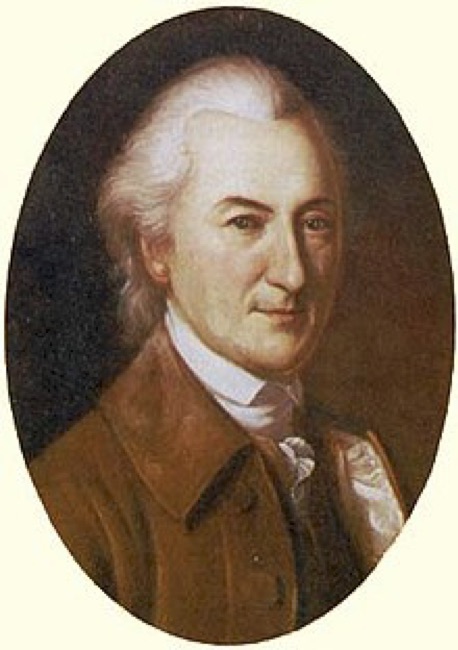
Had the Articles survived Dickinson would
be on the $1 bill.
The Articles were first submitted from committee authored by John Dickinson in August of 1776 and then ratified by the Continental Congress in November of 1777. Over a year of seasoning. Most historians suggest that it was quickly thrown together because of the exigencies of war, but the contrary seems to be clear – and not because the ratification process in Congress was over a year but because of the institutional framework that the Articles established and the identity which the Articles validated.
The Articles established an institutional framework that supported every political claim made by British colonists since conflicting views on representation happened between the colonies and Parliament. Most importantly, the Articles did not establish one nation, but instead confirmed the establishment of 13 nations with a connecting institution, the Continental Congress. More important than that the Articles did not establish the Continental Congress as a government, and those Articles was not, strictly speaking, a constitution, but rather part of a constitutional construct which also included the separate state constitutions and colonial practice.
When, for the last 200 some odd years, Americans have been taught to the contrary about the Articles, Congress, government, constitution, how can these claims be made? How can history be changed? Precisely because this isn’t changing history, it’s changing “heritage.” Heritage and History are often confused. One is the story we tell ourselves about who we want to believe we are and the other is a discipline devoted to interpreting evidence to try and understand who we were. Our “Heritage” is that Americans, even before the Revolution loved freedom (and conversely the British hated freedom). We fought against tyranny, by fleeing the Old World for religious reasons, and settling in a well spring of freedom that called to us from across an ocean (unless you were African and then despotism and depravity called you). So “Heritage” also convinces us that “United States” has one meaning (our contemporary meaning of one nation indivisible), and that “Americans” were always what we think they are (our contemporary definition of a people, in a nation, with liberty and justice for all). We assume, because we define a thing a certain way and that thing was talked about 250 years ago that those who spoke of the thing we know to be true meant the very same thing. But they didn’t. British colonists did not know what it meant to be American, they had to invent that concept. And Inventing the Republicwas not as intuitive as we, and historians, and our “Heritage” have made it seem.

This book does in 9 chapters what this blog is trying to do
The Articles merely parroted British colonial conceptions about institutional formation that the colonists had argued for over a decade. They had claimed loyalty to a King, but to a King that only had certain powers and prerogatives to handle, foreign policy, maintain the military and establish general parameters of colonial life. Not directly govern the colonies. They admitted that Parliament was owed “all due subordination,” but “due” meant that Parliament in England only had certain powers to regulate externalities of the colonies. Not directly govern the colonies, or directly tax, make law for, the inhabitants of the colonies. Only the colonial assemblies, they had argued since the Stamp Act Congress, could tax or make law for the internal policy of the colonies. Each colony controlled itself. Each colonial assembly with the support of the King, could govern the colonies. The British in England never understood this concept, in part, because the colonists claimed this was their British right, but Parliament knew that British rights extended to wherever Parliament wanted to go.
“But the colonists weren’t represented by Parliament.” I heard you. But you’re wrong. At least from the British perspective that the colonists claimed to have had. In the Empire, representation was not based on a Modern concept of choice, rational decision making through voting. Instead, it reflected Archaic patterns of connection through blood. Every colonist, just like every average person in England, was represented by the House of Commons because they had common blood. They didn’t vote for that blood and they needn’t vote to be represented by the Commons. Blood represented them, just as the noble blood represented those of noble birth in the House of Lords.

People were represented by their blood: noble or common
Representation in real British constitutional terms was by the fact of your birth, not by the act of your vote. The colonies, imperfectly British as they were, had developed a whole different constitutional understanding because representation in your local colonial assembly wasn’t tied to birth it was mostly tied to land ownership. So the British colonists got their Britishness wrong, or at least they got wrong what they thought it meant to be British. It was this concept of representation and who could make law that they incorporated into the Articles. It was this concept of institutional formation that tells us that they forming a system based not on being “American” but on being British colonists.
Here’s part of the evidence and it can only come from looking at what the Articles actually conceived.
The first article was just about the name – that the new confederation would be the United States of America, but the meaning of this is lost on a reader in the 21stcentury who has a conception of the USA as a nation where state meant a province and province means a subordinate part of a greater whole. British colonists didn’t think that way. Why would they? They had always been separate, independent colonies and so state to them meant what we only term today as nation – but in the 18thcentury state meant nation – a State.

Except for the Alt-Right, we don't look at the U.N. as government
because it can't make law, and it can't tax to survive on its own.
It is the nations of the world "in Congress assembled"
Besides putting this in context with thousands of other references which you don’t want to read, the Articles give us a clear indication by what the Delegates of Congress actually meant – they meant nation and wrote state:
Article II: Each state retains its sovereignty, freedom and independence and every Power, Jurisdiction and right, which is not by this confederation expressly delegated to the United States, in Congress assembled.
You may not see it, hell, 200 years of Historians have overlooked it (to serve Heritage instead of their calling), but it is there. Do you see something peculiar? No? Everything looks pretty constitutional, does it? Oh, except that last part, but that can’t mean much, can it? It can’t be important because you’ve never read it before and it sounds stupid anyway. But that phrase “in Congress assembled” is the key to understanding the whole article and why they wrote state but meant what we call nation. It’s easy to get if it wasn’t the USA. Each “state” is separate, and under its own power. If this was any other configuration, you would easily get that, but its hard because we think we know, and so in the past they must have known, just what America was. But they weren’t Americans, they were British Colonists who had lived in a framework where the empire, through the King, had unity, but their home colonies were all as separate as oil and vinegar.

I think it's rather obvious that this isn't used on salads
The only time they had unity of any sort was when and where their delegates met “in Congress assembled.” The only time the “states” as nations didn’t control everything about themselves was when their delegates met “in Congress assembled. There was no one nation. No E Pluribus Unum, out of many one, there was Multa de Multis, many out of many.
Most significantly, Congress was not a government. Instead, it took the place of the King as the symbol of their struggle together and a body in which they could find unity (in Congress assembled) to solve their collective problem of staying alive as the British were trying to conquer them. In no way does Congress possess legislative authority and most importantly, Congress, under the Articles, has no power to tax. They can ask for money, but they can’t require it. This conception was exactly what British Colonists had rebelled in favor of in the first place – Parliament (King, Lords and Commons in England) could not tax the colonies because the colonies had separate and independent governments (legislative assemblies) to do that. So what did they create? The Articles along with the state constitutions established a system where King, and England, was replaced by Congress, and only the states had power to govern the states. Thirteen nations and one form of unity, in Congress assembled, to organize mutual interests, like peace and war, weights and measures …. But not making law. Congress, like the King, was a sovereign, but the states possessed sovereignty, the power to make law.
And Power is what institutional frameworks are about. After 8 years of fighting for the independence of each of the nations of the continent, members of Contitnental Congress and the Continental Army realized that their conception of the America was not States in Congress assembled, but in a new configuration of one nation out of many. E Pluribus Unum drove the desire to form a more perfect union and develop institutions of power that got rid of states as nations and instead devised states as subordinate to a government of the whole. Americans had not initiated the American Revolution, British colonists did, and the Articles were not what we know of as the United States. That concept was founded in the development of the one nation framework of the Constitution of 1787. But even though I used the word “founded” the Framers, were not the Founders, because America is not about power, and therefore not founded strictly by the Constitution. So, believe it or not, we will not find the founding until, a very fitting, for those who know me, installment X
We are in a State of Nature …. The Distinctions between Virginians, Pennsylvanians, New Yorkers
and New Englanders, are no more. I am not a Virginian, but an American.
Patrick Henry, John Adams’ Notes on Debate
|
| Excellent |
|
| Perspective makes History |
 |
| Lord North: The most hated man who never set foot in the Colonies. He tried to please. |
 |
| Had the Articles survived Dickinson would
be on the $1 bill.
|
 |
| This book does in 9 chapters what this blog is trying to do |
 |
| People were represented by their blood: noble or common |
 |
| Except for the Alt-Right, we don't look at the U.N. as government because it can't make law, and it can't tax to survive on its own. It is the nations of the world "in Congress assembled" |
 |
| I think it's rather obvious that this isn't used on salads |
Tuesday, July 3, 2018
Finding the Founding (Part VIII): You Think Our Divisions Are Recent?
In the 1940s, and more urgently in the 1960s (thanks to Castro), Costa Rica embarked on a series of agrarian reform measures, similar in spirit to those of the Gracchi, but without the grizzly murders of top political officials (see Finding the Founding VII). While these reforms did not create a paradise – 20% of Costa Ricans live in poverty while the USA stands at 16% – the country is the most stable (the only stable?) country in Central America. Costa Rica became better because the lives of more of its population had access to the means for wealth, ok, maybe not wealth the way we normally use the word, but at least the means to not living a life controlled by the 1%. The 1% still owns a sizeable portion of the land, but not all of it. There is a direct correlation between stability, democratic access and the realization of rights in countries, nations and republics where people have access to a material life where they can sustain themselves and not live cap in hand to the ruling class. The Gracchi knew it, Costa Rica knows it and supposedly the founding ideology, according to the most influential historians of the American Revolution, like Gordon Wood, and Bernard Bailyn, was based on moving money (wealth) to support a middle class through taxation on wealth.

The Jesus Tree in Costa Rica: A place so miraculous
that a tree grows out of the Pacific Ocean!
Power in too few hands, means impoverishment in too many hands. Hah, the Founders knew that too much support to the “Job Creator” class creates a society of owners and peasants – or at least the historians of the ideology of the Revolution would have us believe that they, the Founders, believed that. But in looking for the Founding it is quite apparent that this was not the universal ideology of the Revolution.
Colonial settlement patterns, which we hinted at in previous posts, suggests that a uniformity in ideology among the colonies would be highly unlikely. In fact at the dawn of independence, unity between the colonies, as we understand it, was not desired whatsoever. Instead their were cultural, economic and political divisions that made real union of the colonies into one country impossible.
When it came to classical republican ideas and the support for a thriving and growing middle class as a means to secure freedom, only a few colonies could have really accepted such an ideology. The northern colonies had a middle class, or in the terms of the time, a “middling sort” who owned their own land (not much but enough) and could provide for themselves (not much but enough). Puritan Culture in New England had begun in the 1630s with a disdain for too much wealth accumulation by an individual because it meant they were serving “mammon” instead of “God.” The Quakers of New Jersey and Pennsylvania established those colonies in the 1680s with a similar view that the accumulation of too much wealth established a “cumber” (encumbrance) to “doing good in the world.” By the mid-1700s the religious overtones to these economic and cultural ideals was gone, but the idea that the community is served by a more even apportionment of wealth lived on. And so many were of the classical republican sort. But down South?
Hah.
Down in the southern colonies there was no diversity of class or apportionment of wealth. There were two types of people and it wasn’t free and slave. There were those who had and those who had not. Those who “had” had everything and a monopoly on economic capital, political institutions, social and intellectual access and cultural standards. They were an oligarchy of the Planter class who sought one
Love this guy!
thing. More of what they had, and to simplify, they had power. Unlimited Power (oh, I already did the Palpatine thing). Could these people really buy into redistributive political policies to help stabilize a middle class and maximize freedom for more and more and more people? Yes, Jefferson wrote the Declaration of Independence. But did he really live those ideas? Jefferson was like most in the Planter Class, they could have an idea and use it for their gain, but really see it through? No.
When it came to Classical Republicanism as a formal ideology it was in their minds as a philosophical whimsy, but as to practice? Plantation owners had a way of keeping the mind and body separate, or perhaps in more contemporary terms their ability to accept cognitive dissonance was off the charts. The Randolphs, Lees, Washingtons, Madisons and most of all Jeffersons would not, could not accept a society of wealth moving to the center in order to realize a better society. They believed in their status and that it entitled, no, that it demanded their absolute control over all they surveyed, not just slave but also free. They believed in Power and they knew that power of necessity stomped out Liberty … and they became informed about this power/liberty dialectic straight from the source, Cato. Not the ugly old man Roman Cato, but a duo of English Opposition writers, Trenchard and Gordon, the authors of Cato’s Letters.

Jefferson, Madison, Lee, Oh My!
Taking on a Greek or Roman pseudonym was all the rage in 17thand 18th British political writing (that means among the colonists as well). Why do you think the author of this blog is Cirrus Stratus? Even studying the ideological patterns of the Revolution makes you want to put on a classical hat, and those who donned Cato’s were probably the most famous to do so (I guess Publius, author of the Federalist Papers would beg to differ!). The author’s of Cato’s Letterswere part of a trend in early 18thcentury British political thought often called by scholars The Commonwealth Men. Numerous writers, of which Cato’s authors Trenchard and Gordon were the most famous and important, espoused a republicanism that emphasized a Machiavellian rehashing of civic virtue, personal liberty and a government that was regulated, controlled and run by the people for the good of the people. According to many historians of the Revolution these writings were highly influential among the power groups of the colonies, especially the northern merchant class and the southern planter class. But given the historical context of these two regions, it is highly doubtful that the interpretation of “by the people, for the good of the people” would have been consistent among the two groups. Yeah, they spoke a similar political language, but the meaning of their words was drastically different.
And the meaning had to be different based upon the biggest difference between these two groups – the extent of slavery as the driving cultural force in one of those regions.
 Both the south and the north had slavery. It was sanctioned by British law throughout the empire and especially in the colonies, but as a cultural entity it was different, if for no other reason than that in the northern colonies slaves were an insignificant percentage of the population. Outside of northern cities and ports there were less than 1% of the population held as slave, and in those cities the highest % was about 10 of the overall population. In the south almost half the population was held in chains in the 1770s. It was a constant of life in the south that some are free and some are slave and every aspect of culture was permeated by this self-evident truth.
So what that means is that every political concept, civic virtue, liberty, equality, taxation, representation, and government “by the people, for the good of the people” was framed within a context of meaning directly related to whether slaves were in your midst.
Cato, from Cato’s Letters, espoused the idea of power as an inhibitor, or more like the enemy, of liberty – and interestingly enough this Cato was not based upon the Grachi’s Cato, but his great grandson, Cato the Younger, who was an enemy of Julius Caesar. He was so against the swallowing of the Republican Roman state by Caesar that when it was apparent that Caesar had taken control of the state for himself, Cato committed suicide. Had he waited a couple of years he could have helped on the Ides of March, but I guess murder isn’t as strong a statement for how much you love your country as ripping your own guts out, which is what the Younger did. The meaning of this death, much like the 18thcentury ideas associated with it, would not have been lost on colonial ruling classes that ultimately did not control their own government. Power from London was inhibiting “by the people, for the good of the people.” Power was endangering Liberty (even though to be British in the British Empire meant that you were among the freest (maybe the only free) persons on the planet). But the meaning of liberty was different when it came to northern merchants and southern planters, and so for that matter was the means by which power had to be checked in order to maintain liberty.
By the 1770s historians estimate that most males in New England and the Middle colonies had some political access. Most families owned land and provided for themselves, and that had “republican” consequences as to how they conceived their changing relationship with Parliament in England. After a century of “salutary neglect” where Parliament rarely legislated for the colonies there was now a financial need to make the colonies pay for themselves, hence the need for all those taxes. The colonies had been an expense for the crown and for taxpayers in England – an expense that was worth it when Britain was involved in a century of warfare against rival France for global dominance.
When Britain moved ahead in that war (which really didn’t end until WWI and WWII brought the collapse of both empires and paved the way for the American Empire to achieve predominance throughout the world) Parliament decided to shift the burden of running the colonies, of protecting the colonies (but not governing the colonies) to the colonial taxpayers. Colonists in New England and the Middle colonies rebelled, because they were used to passing their own tax laws and these taxes (Stamp Act, Townshend Acts, you know the ones) were passed in London. The old English maxim that law and taxes could only be made by the consent of the governed meant that voters in the northern colonies had to have their representatives make the law. And most people voted, so most people believed that consent was tied to their representatives.
In the colonial south, however, hardly anyone voted. Hardly anyone owned land, and hardly anyone realized the independence of providing for yourself that went along with republicanism and the democratic sentiments of the northern colonies. Almost half the population was in real chains, and of the free population half of that population had no political, economic or social rights – meaning “free” women were in figurative chains. Most of the free male population in the south were dependent upon the only group that was truly free, the Planter Class.
(But was the situation any different for women in the North? In ways that might not be meaningful to the 21stcentury observer there were very important differences between the rights of women in North and South, and those differences were as significant as defining the Liberal and Conservative views to women’s rights in the 21stcentury …. But that AmericaHypothesis is going to have to wait for another posting.)
Both the south and the north had slavery. It was sanctioned by British law throughout the empire and especially in the colonies, but as a cultural entity it was different, if for no other reason than that in the northern colonies slaves were an insignificant percentage of the population. Outside of northern cities and ports there were less than 1% of the population held as slave, and in those cities the highest % was about 10 of the overall population. In the south almost half the population was held in chains in the 1770s. It was a constant of life in the south that some are free and some are slave and every aspect of culture was permeated by this self-evident truth.
So what that means is that every political concept, civic virtue, liberty, equality, taxation, representation, and government “by the people, for the good of the people” was framed within a context of meaning directly related to whether slaves were in your midst.
Cato, from Cato’s Letters, espoused the idea of power as an inhibitor, or more like the enemy, of liberty – and interestingly enough this Cato was not based upon the Grachi’s Cato, but his great grandson, Cato the Younger, who was an enemy of Julius Caesar. He was so against the swallowing of the Republican Roman state by Caesar that when it was apparent that Caesar had taken control of the state for himself, Cato committed suicide. Had he waited a couple of years he could have helped on the Ides of March, but I guess murder isn’t as strong a statement for how much you love your country as ripping your own guts out, which is what the Younger did. The meaning of this death, much like the 18thcentury ideas associated with it, would not have been lost on colonial ruling classes that ultimately did not control their own government. Power from London was inhibiting “by the people, for the good of the people.” Power was endangering Liberty (even though to be British in the British Empire meant that you were among the freest (maybe the only free) persons on the planet). But the meaning of liberty was different when it came to northern merchants and southern planters, and so for that matter was the means by which power had to be checked in order to maintain liberty.
By the 1770s historians estimate that most males in New England and the Middle colonies had some political access. Most families owned land and provided for themselves, and that had “republican” consequences as to how they conceived their changing relationship with Parliament in England. After a century of “salutary neglect” where Parliament rarely legislated for the colonies there was now a financial need to make the colonies pay for themselves, hence the need for all those taxes. The colonies had been an expense for the crown and for taxpayers in England – an expense that was worth it when Britain was involved in a century of warfare against rival France for global dominance.
When Britain moved ahead in that war (which really didn’t end until WWI and WWII brought the collapse of both empires and paved the way for the American Empire to achieve predominance throughout the world) Parliament decided to shift the burden of running the colonies, of protecting the colonies (but not governing the colonies) to the colonial taxpayers. Colonists in New England and the Middle colonies rebelled, because they were used to passing their own tax laws and these taxes (Stamp Act, Townshend Acts, you know the ones) were passed in London. The old English maxim that law and taxes could only be made by the consent of the governed meant that voters in the northern colonies had to have their representatives make the law. And most people voted, so most people believed that consent was tied to their representatives.
In the colonial south, however, hardly anyone voted. Hardly anyone owned land, and hardly anyone realized the independence of providing for yourself that went along with republicanism and the democratic sentiments of the northern colonies. Almost half the population was in real chains, and of the free population half of that population had no political, economic or social rights – meaning “free” women were in figurative chains. Most of the free male population in the south were dependent upon the only group that was truly free, the Planter Class.
(But was the situation any different for women in the North? In ways that might not be meaningful to the 21stcentury observer there were very important differences between the rights of women in North and South, and those differences were as significant as defining the Liberal and Conservative views to women’s rights in the 21stcentury …. But that AmericaHypothesis is going to have to wait for another posting.)

Mary Wollstonecraft: The most important philosopher
of the last 250 years from the "Oh, her daughter wrote
Frankenstein?" Category. She defined the abuses of the
"Politics of Pretty."
The idea of representation in the south was not democratic. It couldn’t be. Nothing could be democratic or republican in a southern culture where raw power held by the few of a landed elite held other human beings as slaves. Well, they didn’t really think of them as fully human, is often the response I have heard to make apologies for the hypocrisy of Jefferson’s “created equal.” Right, they didn’t and they didn’t really think of free people outside of the Planter Class as really human either, at least not the created equal kind. And the Planter Class had no basis, along with anyone in southern culture for understanding equality of any kind, nor did they have the ability to comprehend government “by the people for the good of the people.” What they had was a cultural underpinning, not of Liberty, but of Power, where power entailed having rights and power was, for the most part, part of the birthright of the Planter Class. So when they objected to Parliament’s taxing laws, it was not for Cato’s reasons as the northern merchant understood by civic virtue, but by virtue of their birthright to wield power over all that they surveyed. And Washington was a surveyor for a time. So where is the Founding? We’ll find it in an X, the tenth and final installment, and it will be a bittersweet ending for all you GOT fans.
 |
The Jesus Tree in Costa Rica: A place so miraculous
that a tree grows out of the Pacific Ocean!
|
|
| Love this guy! |
 |
| Jefferson, Madison, Lee, Oh My! |

 |
Mary Wollstonecraft: The most important philosopher
of the last 250 years from the "Oh, her daughter wrote
Frankenstein?" Category. She defined the abuses of the
"Politics of Pretty."
|
Monday, July 2, 2018
Independence Day: Why it wasn't June, or May, or April or any other Month
Interestingly the dates and days are the same in 2018 as they were in 1776. On Friday, June 29 they received a courier with the news in the late afternoon. So they adjourned before acting. On Saturday, June 30, they pondered in the coffee shops in the morning and in the taverns that eve. On Sunday, July 1, they pondered in the churches in the morning and in … well the taverns were closed in Philadelphia that eve. On Monday, July 2, the first day of business since the news arrived they acted, because they had to do something to save their collective Congressional asses.

Independence Hall!
We think of independence as a bold stroke, a patriotic moment, a courageous yet divisive decision, and in the historical abstract our mythology is correct. “Independance” did take courage by patriotic figures who knew that it would be praised and cursed, but the moment of July 4, 1776 really had nothing to do with these variables, at least not as we have been taught. Instead for the delegates in the Continental Congress it was a decision forced upon them, predicated upon a decision they had intended to put off but made immediate because of a monumental failure. And that scenario we are never taught.
Much of what is to follow is based on an article I am working on but articles take so much time, and they are not nearly as fun as blogs, so here is the blog form. Before we begin indulge me a little with a scenario of my own. Imagine, if you will, an adolescent who has recently made some very obstinate actions towards the authority of parents who had finally had enough of shenanigans. The teen lives at home under the protection of these parents, but due to that recent obstinance has been given an ultimatum that it is time to move out. The teen began making plans, looking for a place, looking for roommates, looking for some sympathy from friends, and though the teen was not allowed in the family home, the teen still regarded the house of his parents as home. Finally, several months later, after crashing the family car, this adolescent announced to the parents, “I am moving out, and you can’t do anything about it.” My question regards who actually made the decision for the teen to move out? The teen with a bold pronouncement? Or the parents with the demand months and months before? According to the American History that you and I grew up with, it was the teen who claimed his own miraculous independence.
In August and September of 1775, King George III of Great Britain, and therefore, of Britain’s North American Colonies, declared the colonies in rebellion and out of the empire. Upon his word, the word of his majesty the King, the colonies were independent. Why did he do this? For legal reasons.
The colonies under British (English) law were colonies by settlement of British colonists and therefore those who lived in the colonies enjoyed the rights of participation in government (consent) as had been long standing practice in England and long developed legally as part of the British Constitution. What this meant is that the colonies had the right to reject aspects of rightful, constitutional, Parliamentary rule (the rule of King, Lords, and Commons). And so they had done for a decade before these speeches by the King. But to the Crown and the government in London that had to end. After indulging the colonist’s refusal to be governed, the easiest way for the crown to get around the rights of free British subjects (their right to consent to government) was to make the legal basis of the colonies something other than that of colonies by “settlement.” The other type of colony under British law, colonies where the crown could impose whatever government it liked and establish rights of whatever whim it wanted, was colony by “conquest.” And now after the King’s speech, with the colonies no longer part of the empire, they were free to be conquered and imposed upon as Parliament in England saw fit.

Can you imagine this as your ruler? For no other reason than she was born to it?
Or is it better to make your accident by ballot than accident by birth?
That she would actually be photoed by a prop from a show that
totally depicts why blood based systems are horrific just shows how
messed up the concept of birthright monarchy is. Morrissey is at least right on that regard.
If you think your internet lag is a problem, imagine getting news by sail boat across an ocean. It was not until late November and December that the colonists, and in particular the delegates of the Continental Congress, began getting the news of the change in their legal status. And they knew, they knew upon reading the text of this news that whether they liked it or not they were then and their “independent” of Great Britain. All of the colonies, all of the colonists, were independent. There was no debate, there was no chance for reconciliation (so the play/movie 1776 is utter hogwash), there was only an independence forced upon them and they had better do something about it. And they did.
They, the delegates of the Continental Congress, convened in January of 1776 and began meeting in secret to formulate a plan to secure their independence – to 1. Confederate into some form of disunited unity 2. Find allies (they hated the French because they were British but now that they weren’t British they thought they could rely on the French) and 3. Make a bold pronouncement as to the nature of what independence would mean or in other words declare their intentions to a candid world.
What? You’re still stuck on colonist’s refusal to be governed? Why should they not refuse the tyranny of British tyrannical tyrants? Ugh. Ok. Short version. No tyranny. The English taxpayer paid the bills of the colonies, not the colonial taxpayer, and when the French invaded with their native allies, it was the English taxpayer who paid the expense for the armies that protected the colonies. Colonial courts? Paid by English taxpayers. Protection of colonial shipping from pirates? Paid by English taxpayers. Colonial administration? Paid by English taxpayers or at least a lion’s share of expenses throughout the colonies, not paid by colonists, but paid by English taxpayers. So that is where the Sugar Tax and Stamp Act came from. The colonists threw a fit and so the British repealed. That’s where the Townshend Acts came from. The colonists threw a fit and so the British repealed … except for the one on Tea which was necessary to save the English East India Company from going broke (they took this from Obama and his too big to fail doctrine (The Revolution was Obama’s fault!)). So when the Sons of Liberty destroyed the Tea, the British were the unreasonable ones? Independence and the values of the Revolution are indeed to be lauded, but to make the British in this case into tyrants is a historical absurdity. Now, can we proceed with the Congress?
January and February they met in secret to develop the plan and plan other contingencies for a British-less future. In March some more writing lagged aboard ship communication and brought word of Parliamentary Acts to conquer the colonies, and what that entailed – a huge army and the end of colonial merchant commerce as they knew it. The reaction of the delegates? We need to invade Canada! Ok, not quite because the invasion had already begun, but now it was more necessary than ever.

Oh Canada! My favorite view: Parish Island
at Charleston Lake, Ontario
Trump was not the first to realize the threat of those polite and friendly people to the north of us, the Continental Congress realized it to – or at least they realized that Canada posed a strategic problem that had to be dealt with in the wars to come. With the formation of the Continental Army in the Summer of 1775 (a move that helped to precipitate the King’s speeches) it was not long after that colonial strategists realized that Canada provided close proximity to the colonies as a base of operations for Britain. In November a force was sent under the inferior command of Richard Montgomery whose best general officer was none other than Benedict Arnold, the traitor. But before he was a traitor, it turns out that Benedict was the most capable field officer in the Continental Army – in fact the great victory of Saratoga in 1777 that supposedly saved the Revolution was because of Benedict (who got no credit and promptly went back to being British). In 1776 Benedict also saved the Canadian invasion from total collapse and annihilation. So what does that have to do with independence? Return to Philadelphia and we’ll see.
While the invasion was going on hundreds of miles from the delegates, they too had work to do, to secure independence and mostly to make sure that they didn’t fail in keeping their independence – because if the British come knocking at Independence Hall, they are going to hang all the delegates. It’s what you do to leaders of resistance when you conquer. On May 10, 1776 the delegates voted a resolution that further demonstrates that they knew they were independent. The resolution which was sent to every colonial legislature stated that each colony should from that day forward base their authority, not on the authority of the King, but on the authority of the people of the colony. Seems pretty definitive in spite of what the Broadway play would have us believe, that there was some big question, some trepidation, some outrage – nope. They all knew they were independent and they were developing the legal corpus to gain the support of the population so that their corpus was not hung from London Bridge.

Hey, in its day this was high speed fiber optic cable, baby!
And then the news came, Friday, June 29. The Canadian Invasion had collapsed and was an utter failure. Confederation was still in committee, as the old colonies/new states had some things to iron out. Negotiations with France were getting underway, so the colonies had no official allies. The delegates needed to do something, but it was late on a Friday and it was time to get their drink on. So they adjourned. Surprising given the urgency of the moment, but it was a different time, when things moved more slowly (three months to google anything). Besides, they only had one thing left to do. Can’t unveil the Confederation Plan of Union or let your fellow colonists know that now we fight with the French. No, only one thing left to do and that can wait until Monday.
On Saturday, June 30, they pondered in the coffee shops in the morning and in the taverns that eve. On Sunday, July 1, they pondered in the churches in the morning and in … well the taverns were closed in Philadelphia that eve. On Monday, July 2, the first day of business since the news arrived they acted, and ratified a declaration to be announced to the colonists to rally them to their cause – their cause being one of the delegates staying alive. The Founders knew they needed a rip roaring indictment of Britain and the British King to excite the masses (most of whom were British/English by birth, language, culture and choice) and get them on the side of independence, hence this was a military not an ideological decision. The Founders knew that if they could not get support that all the “I’m sorry” in the world would not save them from the wrath of empire and the illing pain that comes from losing your head. The Founders knew that in spite of being legally on their own for nearly a year, it was time for them to let the parents know, “I am moving out, and you can’t do anything about it.”
Happy Independence Day.
 |
| Independence Hall! |
 |
Can you imagine this as your ruler? For no other reason than she was born to it?
Or is it better to make your accident by ballot than accident by birth?
That she would actually be photoed by a prop from a show that
totally depicts why blood based systems are horrific just shows how
messed up the concept of birthright monarchy is. Morrissey is at least right on that regard.
|
 |
| Oh Canada! My favorite view: Parish Island at Charleston Lake, Ontario |

Subscribe to:
Posts (Atom)